
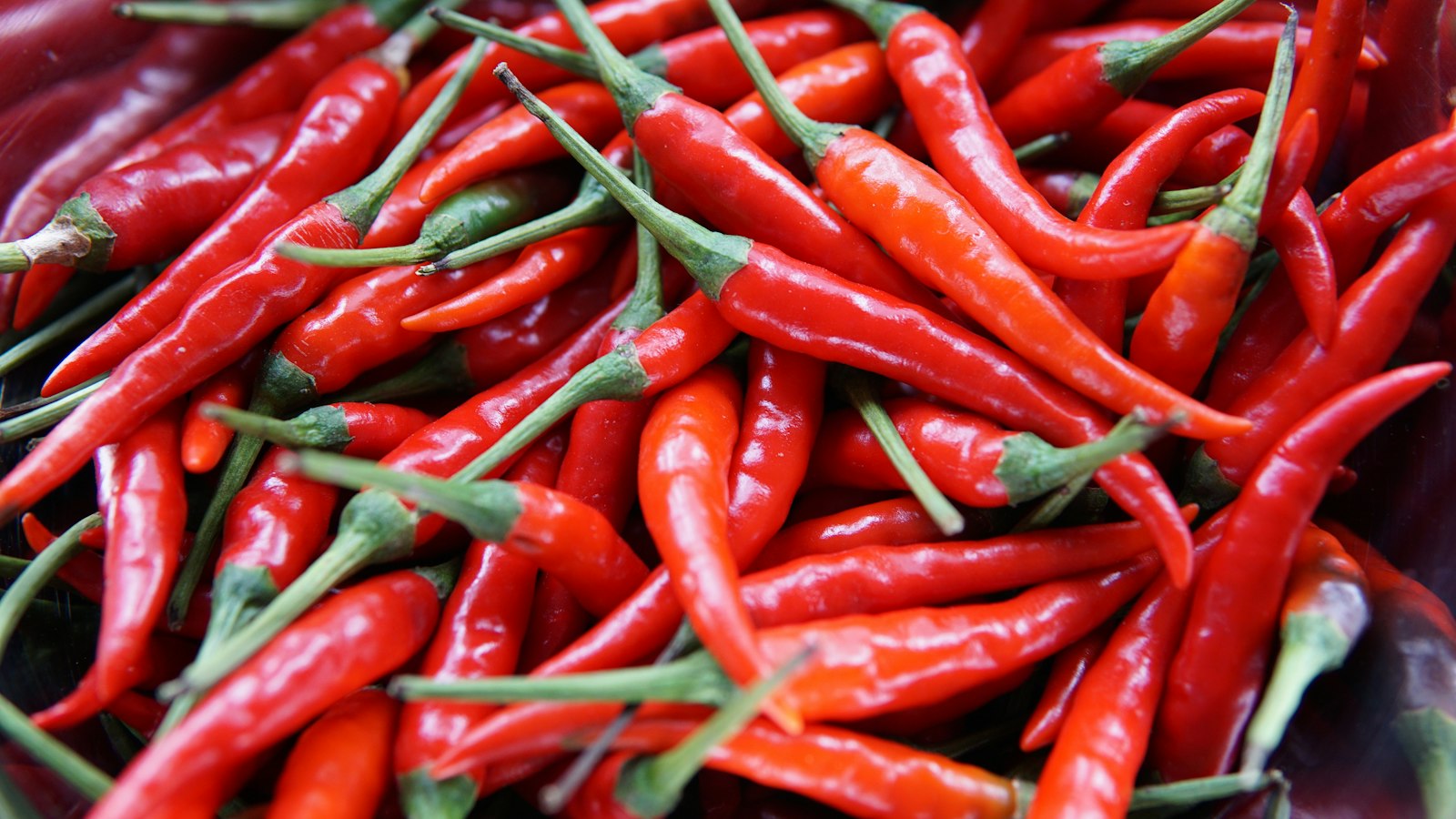
Hot pepper, or chilli, is one of Uganda's most profitable horticultural crops when managed well. It is used fresh in local cooking, dried and ground for spices and sauces, and exported fresh to European markets. Once plants start bearing, they can be harvested repeatedly for many months.
Popular varieties
- Bird's eye chilli: small, very hot, popular for export and drying
- Scotch bonnet / habanero types: lantern shaped, aromatic, strong demand from processors and exporters
- Cayenne types: long chillies used fresh and dried
- Improved hybrids from seed companies with better yields and uniformity
Choose varieties based on your buyer's needs before planting.
Climate and soil
- Warm conditions with moderate rainfall or irrigation
- Well drained loam soils rich in organic matter
- Soil pH around 6.0 to 7.0
- Avoid waterlogged fields and land recently used for tomatoes, potatoes or eggplant to reduce disease
Nursery
- Raise seedlings in raised nursery beds or seedling trays with clean, sterilised soil or substrate.
- Sow seeds shallow, cover lightly and keep moist.
- Provide shade and protect from heavy rain.
- Harden seedlings by reducing water and shade a week before transplanting.
- Transplant at about 5 to 7 weeks when seedlings have 4 to 6 true leaves.
Transplanting and spacing
Common spacing is about 60 to 75 cm between rows and 45 to 60 cm between plants, depending on variety vigour. Transplant in the evening or on a cloudy day and water immediately.
Fertiliser and manure
- Apply well decomposed manure during land preparation.
- Use a basal fertiliser such as DAP or NPK at transplanting.
- Top dress with CAN or NPK during growth and flowering in split doses.
- Foliar feeds with calcium and micronutrients help fruit quality.
Watering and mulching
Peppers need consistent moisture, especially during flowering and fruiting. Drip irrigation saves water and reduces leaf diseases. Mulching conserves moisture and suppresses weeds.
Pests and diseases
- Aphids, whiteflies and thrips: monitor, use sticky traps and approved pesticides.
- Fruit flies: use traps and field hygiene; important for export compliance.
- False codling moth: a regulated pest for European exports; follow exporter guidance strictly.
- Bacterial wilt and fungal diseases: rotate crops, use clean seedlings and avoid waterlogging.
- Viral diseases: control insect vectors and remove infected plants.
For export, observe pre harvest intervals and keep spray records. Residue limits are strict.
Harvesting
Harvesting usually starts about 2.5 to 3 months after transplanting and continues weekly or twice a week for many months. Pick fruits at the colour and size your buyer wants, with stalks intact, using clean crates.
Drying and value addition
- Dry chillies on raised racks or solar dryers, not on bare ground, to avoid mould and aflatoxin.
- Grind into chilli powder or make sauces for local supermarkets, with UNBS certification.
- Package attractively with labels.
Markets
- Fresh produce exporters around Kampala and Entebbe
- Local markets and restaurants
- Spice and sauce processors
- Supermarkets for packaged dried chilli and sauces
Before planting large areas, secure a buyer agreement on variety, quality, volumes and price.
Frequently asked questions
How long does a chilli plant produce?
With good care, many varieties produce for 6 months to over a year.
Is chilli farming profitable?
It can be very profitable due to repeated harvests, but profits depend on pest control, market access and consistent quality.
Get agronomy support
Book a short call with a verified agronomist or export consultant on The Quick Consult to plan production for local or export markets.