
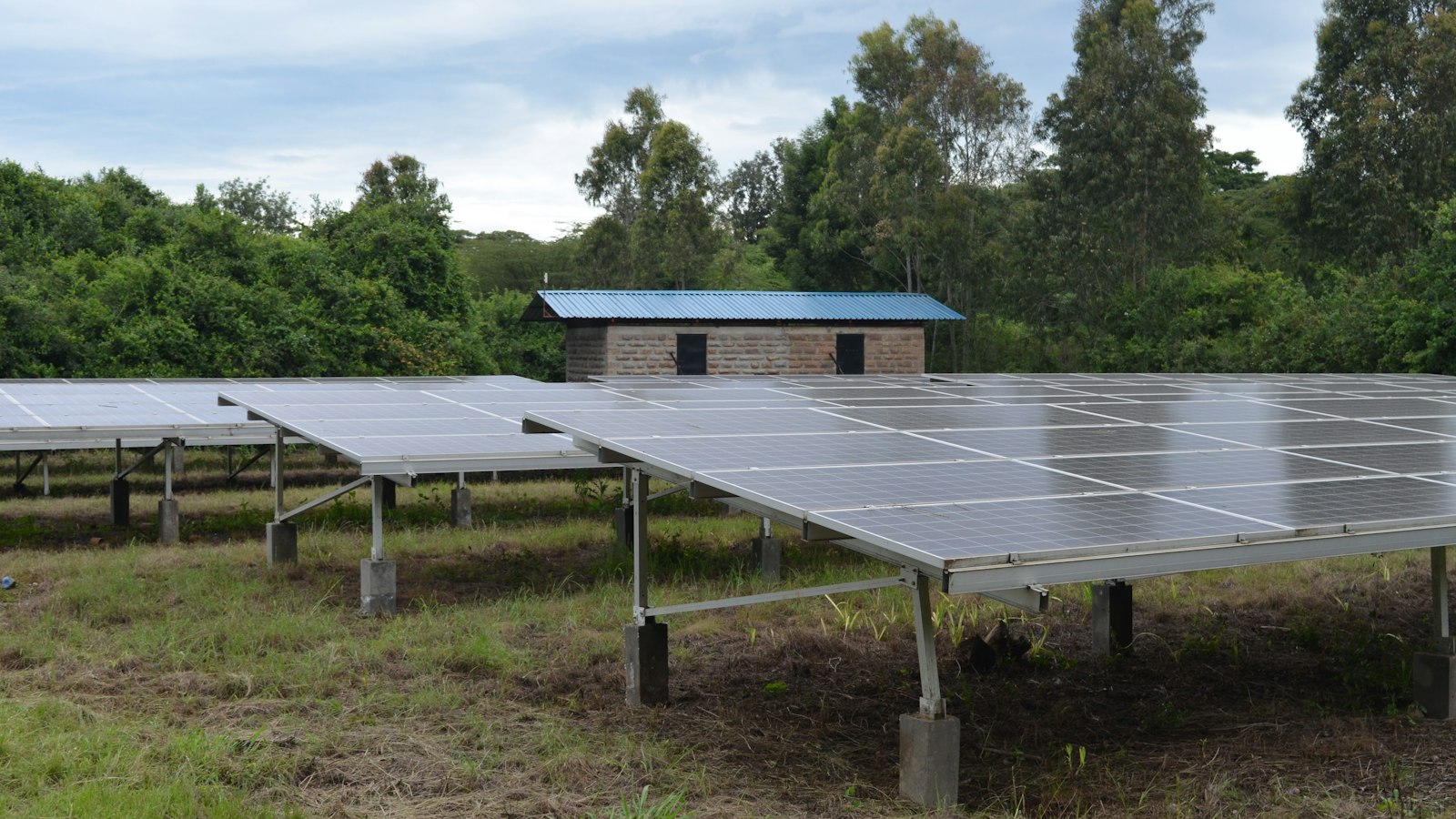
Solar has moved from a rural lighting solution to a mainstream choice for Ugandan homes. Families off the grid use it for lights, phone charging and TV, while households in Kampala, Wakiso and Mukono increasingly install it as backup against power cuts and rising electricity bills.
The hard part is knowing what to buy. Quotes for "a solar system" can range from a few hundred thousand shillings to tens of millions, and poor quality equipment is common. This guide explains how to size a system for your home, what each tier roughly costs, how pay-as-you-go works and how to choose a supplier you can trust.
Step 1: Work out how much power you need
Every good solar quote starts with your energy use, not the panel size. List each appliance, its power in watts (on the label or manual) and how many hours a day you use it. Multiply to get watt-hours (Wh) per day.
Example for a small family home:
- 6 LED bulbs at 10 W for 5 hours = 300 Wh
- TV and decoder at 60 W for 5 hours = 300 Wh
- Energy-efficient fridge = about 1,000 Wh
- Phones, laptop and Wi-Fi router = about 200 Wh
- Total: about 1,800 Wh (1.8 kWh) a day
Sizing the panels
Uganda gets strong sunshine all year, but panels only produce near full power for a few hours a day. For rough planning, divide your daily Wh by about 4 to 5 sun hours, then allow around 25% for losses. In the example, 1,800 ÷ 4.5 ÷ 0.75 gives about 530 W, so you would look at roughly 550 to 700 W of panels.
Sizing the battery
The battery stores power for the evening and night. Lithium batteries can safely use most of their capacity, while lead-acid batteries should not be drained much beyond half. For the example above, you would need roughly 2.5 kWh of lithium storage, or around 3.5 to 4 kWh of lead-acid, for one day of use.
Sizing the inverter
The inverter converts battery power to normal household power. It must handle everything you switch on at the same time, plus the start-up surge of fridges and pumps. Small homes often use 1 to 3 kW inverters.
Some appliances are poor matches for a modest solar system: electric cookers, kettles, irons, water heaters and many air conditioners use a lot of power. Use gas or charcoal for cooking, or plan a much larger system.
Solar prices in Uganda by tier
The figures below are rough, indicative ranges at the time of writing. Real prices depend on brand, battery type, the exchange rate, installation work and your location, so always get at least three written quotes.
Tier 1: Solar lanterns and small kits
Lights, phone charging and sometimes a radio. Suitable for off-grid homes on a tight budget. Expect roughly UGX 50,000 to 400,000 cash, or small daily payments on pay-as-you-go.
Tier 2: Solar home system with TV
A panel, battery pack, several lights, phone charging and a DC television, sometimes with a radio or fan. These are mostly sold on pay-as-you-go and commonly total roughly UGX 1.5 million to 4 million over the payment period.
Tier 3: Small inverter system
Around 0.5 to 1.5 kW of panels, a 1 to 3 kW inverter and a few kWh of battery. Powers lights, TV, fridge, fans, laptops and Wi-Fi. Typically in the region of UGX 4 million to 10 million installed, depending heavily on battery type and size.
Tier 4: Whole-home or backup system
Around 3 to 5 kW of panels or more, a hybrid inverter and 5 to 10 kWh or more of lithium storage. Suitable for larger homes wanting to run most appliances or cut grid bills sharply. Expect roughly UGX 15 million to 40 million or more.
Pay-as-you-go (PAYGo) solar
PAYGo lets you pay a deposit, take the system home and pay the balance in small daily, weekly or monthly instalments, usually by mobile money. If you miss payments the system locks until you top up. Once fully paid, you own it. Well-known brands such as Sun King sell PAYGo systems across Uganda, alongside other providers and some banks and SACCOs that offer solar loans.
Benefits: low upfront cost, installation and servicing often included, and a warranty that lasts as long as you are paying.
Things to check:
- The total cost over the full period, which is usually much higher than the cash price.
- The deposit, instalment amount and number of months.
- What happens if you miss payments or want to pay off early.
- Whether repayment is reported to a credit reference bureau.
How to choose a solar supplier
- Ask for a load assessment. A serious supplier asks about your appliances before quoting. Be wary of anyone who quotes without asking.
- Get itemised quotes. Each quote should list panel brand and wattage, battery brand, type and capacity, inverter brand and rating, cables, mounting and labour.
- Check quality marks. For small kits, look for products that are VeraSol (formerly Lighting Global) quality verified. Ask whether the supplier is a member of the Uganda Solar Energy Association (USEA).
- Use a qualified installer. Wiring should be done by a qualified electrician, ideally holding an installation permit from the Electricity Regulatory Authority (ERA). Proper earthing, fuses and breakers prevent fires.
- Read the warranty. Panels often carry long performance warranties, while batteries and inverters have shorter ones. Get the terms in writing.
- Ask about after-sales service. Who comes when something fails, how fast, and at what cost?
Common mistakes to avoid
- Buying on price alone. Very cheap batteries and inverters are the most common cause of early failure.
- Undersizing the battery. Panels may be fine, but power runs out at night if storage is too small.
- Poor panel placement. Shade from trees, water tanks or neighbouring buildings cuts output sharply.
- Running heavy appliances. Irons, kettles and cookers can drain or damage a small system.
- Ignoring maintenance. Clean dusty panels and keep batteries in a cool, ventilated place.
Frequently asked questions
How much does a solar system for a home cost in Uganda?
At the time of writing, roughly UGX 50,000 for a lantern up to UGX 4 million to 10 million for a small inverter system, and UGX 15 million or more for whole-home backup. Get several quotes for your exact needs.
Can solar power a fridge in Uganda?
Yes. An energy-efficient fridge works well on a properly sized inverter system with enough battery storage for the night.
Is lithium better than lead-acid?
Lithium batteries cost more upfront but usually last longer and allow deeper use of their capacity, so they often work out cheaper over time.
Is pay-as-you-go solar worth it?
It suits households that cannot pay cash upfront. Compare the full PAYGo cost with the cash price before signing.
How long do solar systems last?
Good panels can last 20 years or more. Batteries and inverters usually need replacing sooner, depending on quality and use.
Get advice from a solar expert
A solar system is a big investment, and an independent opinion can save you from paying for the wrong size or poor equipment. Before you sign a quote, book a verified solar or electrical engineer on The Quick Consult to review your power needs and compare supplier offers.